
Beyond Digital Brochures: Transforming Your Website into a Smart Platform
Most websites look polished and still underperform commercially. This playbook shows how to turn a static site into a measurable growth platform for startups and SMEs.
Introduction
A well-designed website can still be an expensive brochure if it is disconnected from how the business actually operates. We see this often. The homepage looks sharp, the animations are smooth, and the enquiry quality is weak. This is not a design problem alone. It is a systems problem.
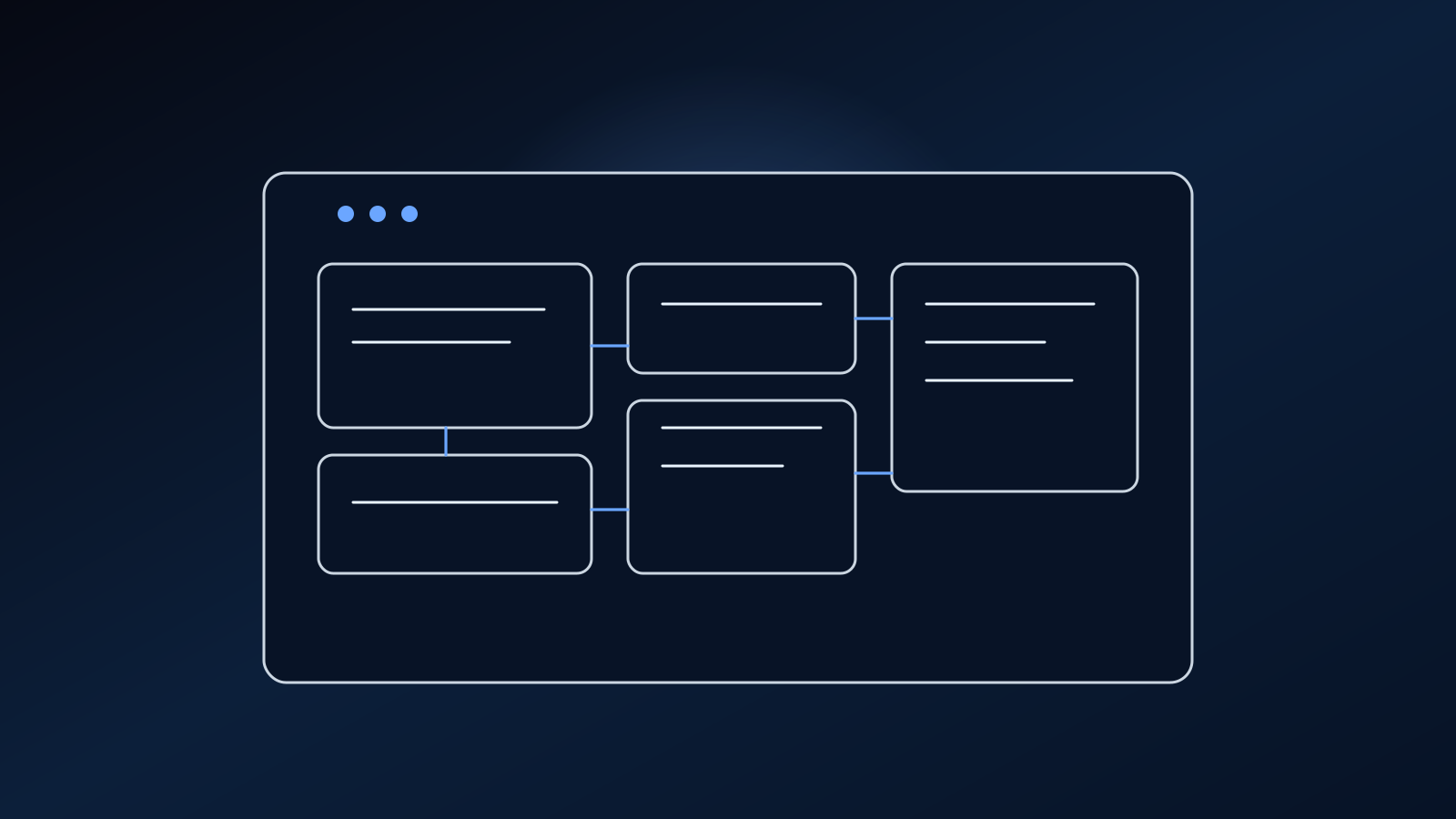
A smart website behaves like part of your operating model. It captures intent clearly, routes visitors to useful next steps, and connects data to the teams that need it. In practical terms, it behaves less like a poster and more like a structured front door to sales, support, and delivery workflows.
Why this matters for businesses
Website quality affects more than brand perception. It affects pipeline cost, sales velocity, support load, and retention. If the site attracts low-fit leads, your team pays for that in wasted meetings. If navigation is unclear, users drop out before conversion. If forms collect poor context, handoff quality suffers.
For SMEs and growth-stage teams, this is usually where marginal gains compound. A stronger conversion path can improve lead quality without increasing ad spend. Better content architecture can improve organic visibility for high-intent terms like website design and development services or web application development company. Small structural improvements can have outsized commercial effect.
The dry truth is that many teams redesign their site every two years while keeping the same conversion logic. They get new colours and similar results. A smart platform approach changes the underlying behaviour, not just the visual layer.
Common mistakes businesses make
1) Treating UX and engineering as separate projects
Design teams optimise for visual coherence while engineering teams optimise for implementation speed. When those tracks are disconnected, user flow quality drops. UI/UX design decisions should be tied to conversion logic, analytics, and content hierarchy from the start.
2) Measuring traffic instead of qualified outcomes
Traffic can increase while commercial performance stalls. What matters is progression through key steps: qualified enquiry submissions, booked calls, activation actions, and downstream close quality. A platform mindset begins with these metrics and works backward into page structure and interaction design.
3) Leaving content architecture vague
Generic pages that mix ten service claims in one block create uncertainty for both users and search systems. Strong sites build clear service pathways. If you offer web development, app solutions, MVP support, and software services, each pathway should be explicit, linked, and outcome-oriented.
4) Ignoring post-launch operations
Launch day is not the finish line. Without a review loop, forms degrade, content ages, and user journeys drift. Teams should run monthly checks on drop-off points, lead quality, and page intent alignment. This is where smart sites continue improving while static sites slowly decay.
What a better approach looks like
Map one critical journey first
Start with one high-value pathway, such as service enquiry to qualified discovery call. Define required user context, friction points, and trust triggers. Build the path end-to-end before scaling the same logic elsewhere. This creates an operating pattern rather than a one-off redesign.
Build service architecture before visual polish
Prioritise clear service pages and internal links first. Then layer visual refinement. For most businesses, this means aligning core pages like web platform development, app solutions, and MVP delivery with relevant supporting content and proof.
Instrument the site for decisions
Track form quality, journey completion, and service-page engagement by intent. Do not rely on pageviews alone. If users repeatedly stall between service pages and contact actions, the site is signalling a clarity gap that design updates alone will not fix.
Integrate with downstream workflows
A smart platform captures context once and passes it into CRM, support, or project intake workflows. This reduces manual re-entry and improves response speed. When operations data and website behaviour are connected, teams can improve both conversion and execution quality together.
Where Stargit fits in
Stargit typically treats website work as product infrastructure. We combine web development, growth architecture, and where relevant automation so the site supports both acquisition and operational handoff quality. For founder-led products, this often includes direct alignment with MVP roadmap planning.
The approach is practical: define a measurable business path, build for that path, then expand with evidence. If you want examples of this in practice, review our case studies.
Final thoughts
The website that performs best is usually not the one with the most effects. It is the one that makes decisions easier for visitors and operations easier for your team. A smart platform earns its keep through measurable progress, not visual novelty.
If your current site is attractive but commercially underpowered, the fastest improvement is usually structural, not cosmetic. A short planning session can identify the highest-leverage path before any redesign spend starts. You can book that through our contact page.